Feeding goats is so much more complicated than I expected. Unlike the saying, goats, in fact, don’t just eat tin cans. I’m telling you hear how I feed my goats, but it’s best to pick a diet that works for you and where you live. I strongly suggest you contact goat owners in your area, as well as asking the breeder that you’re picking your goats up from about what they would advise.
Hay
Hay for goats really depends on what your goat is doing and what purpose they serve on your homestead. For all goats, hay should be horse quality and feed in a hay feeder (goats are massive hay wasters). Milking and pregnant does should be feed Alfalfa or other legume hays to provide essential nutrition for milk production and growing babies. Dry does should be feed orchard hay or another grass hay, and you can occasionally supplement with legume hay if there is less access to forage, such as in late fall and winter. Bucks and wethers should be fed grass hay, since legume hay has too many nutrients and will likely lead to urinary calculi.
You can feed hay free choice, but I would advise you feed just in the morning and night. This is because goat will eat hay if they have access to it, so if they have hay during the day they will eat hay rather than foraging. If you want to know more about hay for goats, I’ll be writing another article soon and I will link it below.
Forage
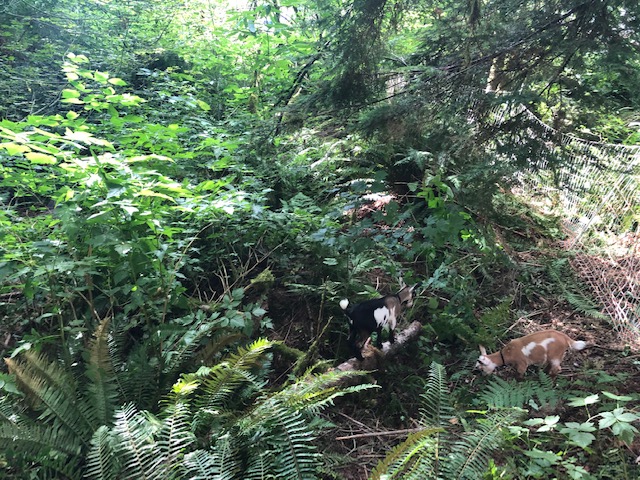
I would suggest letting your goats have access to pasture during the day. Personally, our goats go out in pasture in the morning, and locked up overnight. Since goats are browsers your pasture doesn’t need to be grassy and can actually be heavily wooded and the goats tend to prefer this. Our pasture is just a fenced off section of thick woods, and the goats love it. Just be careful your goats are safe in your pasture with appropriate fencing as well as making sure there are no poisonous plants. You might also want to consider a livestock guardian of some sort if you’re worried about predators.
Grain
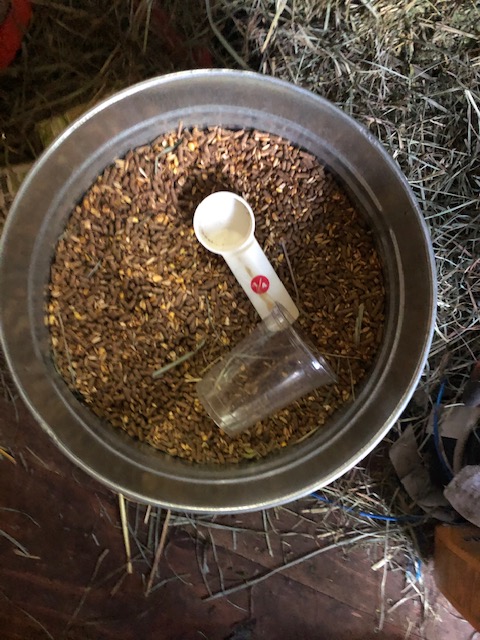
Grain for goats is pretty simple. Bucks and wethers shouldn’t have any grain. No goats should ever have free choice grain. Too much grain can cause bloat and even kill your goat. I feed Purina Goat Chow ®, and feed about ¼ cup per day per dry doe (I just spread it out in the bottom of their hay feeder and let them eat it) and I would read the instructions for how much to feed milking does, since it relies on milk production. (be aware I only have dwarf goats, so you may need to feed more or less for other breeds)
Supplements
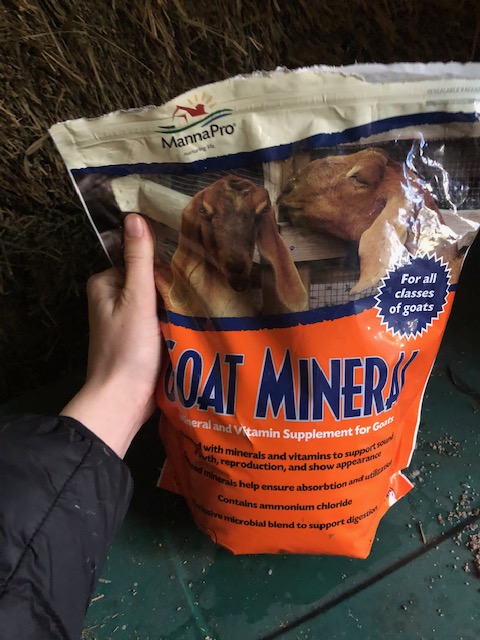
Goat need some supplements. All you really need to offer is minerals, which can be feed free choice or with certain amounts daily. I would suggest using loose minerals, since they are easier for goats to eat than if they try to lick the mineral blocks. I don’t know much about mineral balances, but the best brands I’ve heard are Sweetlix® Meat Maker® and manna pro goat minerals ®. I feed manna pro because this is what is stocked at our local feed store. A lot of people also feed free-choice baking soda to help goats self-regulate their bloat, but I’ve found my goats never touched it and eventually I just took it out.
One thing I’ve noticed about minerals is that they often seem to get moist and clumpy. I’m not sure how to prevent it, so most days I’ll just go out and hand feed a little bit and top dress their grain with however much the mineral brand suggests. If anyone knows how to keep minerals dry, I’d love to know!
Water
Goats should always have access to several sources of fresh water. I’ve never found that my goats drink a ton of water, but I think that’s because all the forage they eat has water in it. In winter time goats love to have warm water to drink as well.
Treats
It’s good to feed some treats to your goats. I mostly just feed mine Manna Pro goat treats, and they love them! They also love pumpkin and sunflower seeds, which are actually beneficial, pumpkins seeds keep down worm loads and black oil sunflower seed can help achieve a beautiful coat.
Other Posts
 Highschool Homesteader