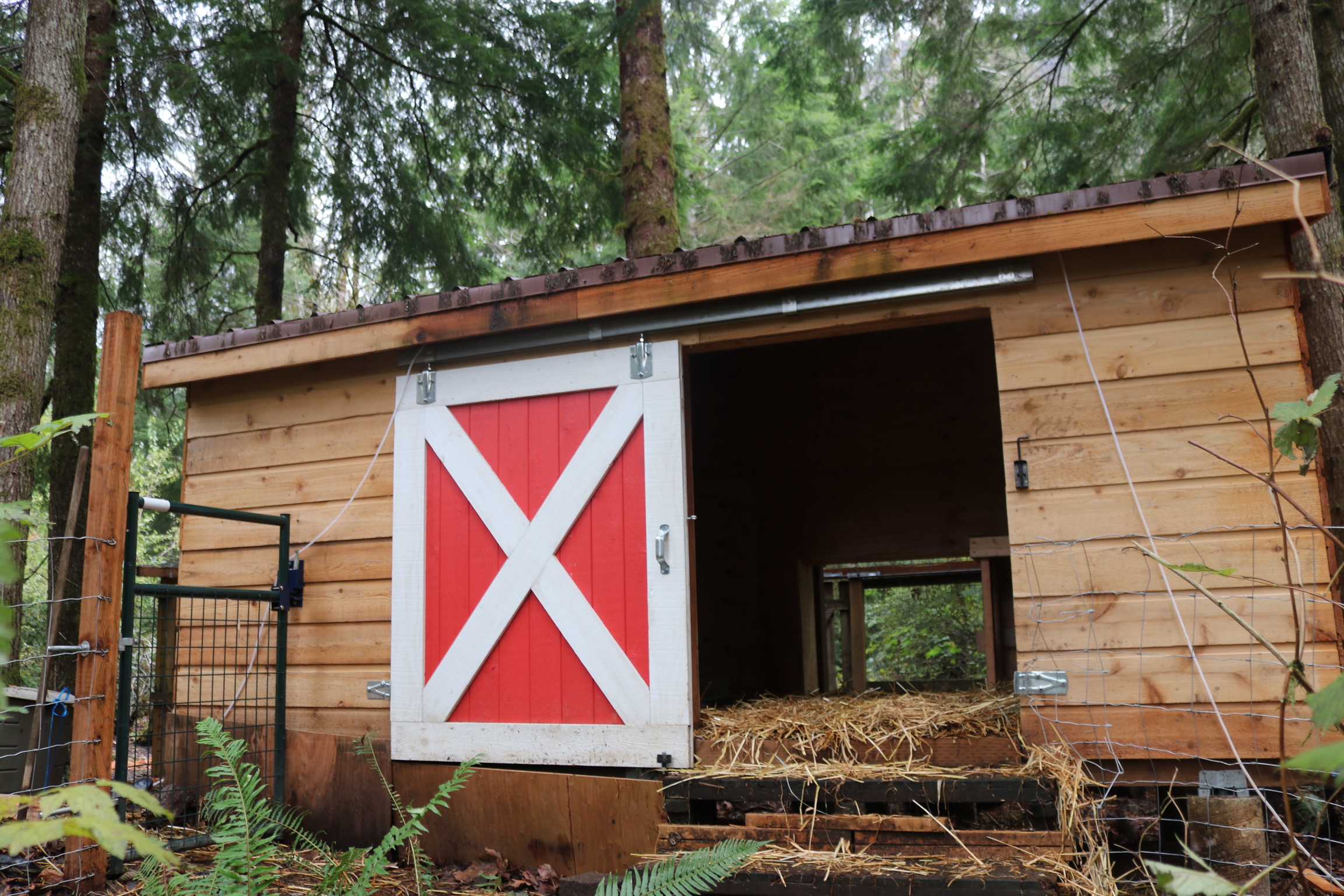
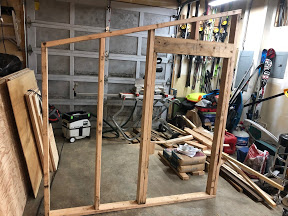
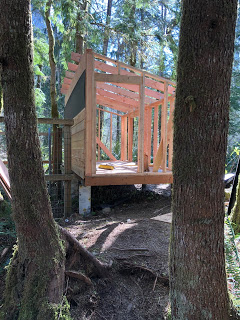
Just a couple months ago I finished building my goat barn. Despite never owning goats before (or any farm animals for that matter), I LOVE how it ended up!
When I began my research to get goats, I learned that though goats could live with just some simple dog houses or pallet barns, that wasn’t a solution that would work for us here in rainy Western Washington. Goats aren’t too fond of rain. In addition, we live somewhere widely known for LOTS of predators and our neighbors have had some awful incidents with their chickens, so I knew that our goats had to have somewhere secure and safe to sleep at night. I also learned goats need good ventilation, hay storage and ten square feet of indoor space per goat.
So, my goat barn design emerged! There were so many things to consider when I designed and built my barn, and in this article, I hope I can make it easier for you to build your dream barn.
First off is ventilation. To maximize your ventilation, there are a couple key tricks. First of all, try to have at least one big barn door. I have a sliding door that I love. This allows air to circulate better. I like having a sliding door because in addition to looking amazing, if it’s really cold or rainy, I only have to open it halfway to let the goats out to pasture, keeping in most of the heat. On warm days, I open it all the way and let the cool breezes in to cool the barn down. In addition, I used hardware cloth on the eves instead of bird block for just a little more air flow. Finally, on the human only entrance to my barn, I used a Dutch door (A door on top and a door on bottom) so I can open the top door to let air circulate when I need to. Just be careful that if your goats have access to this door, the bottom door is at least four feet tall.

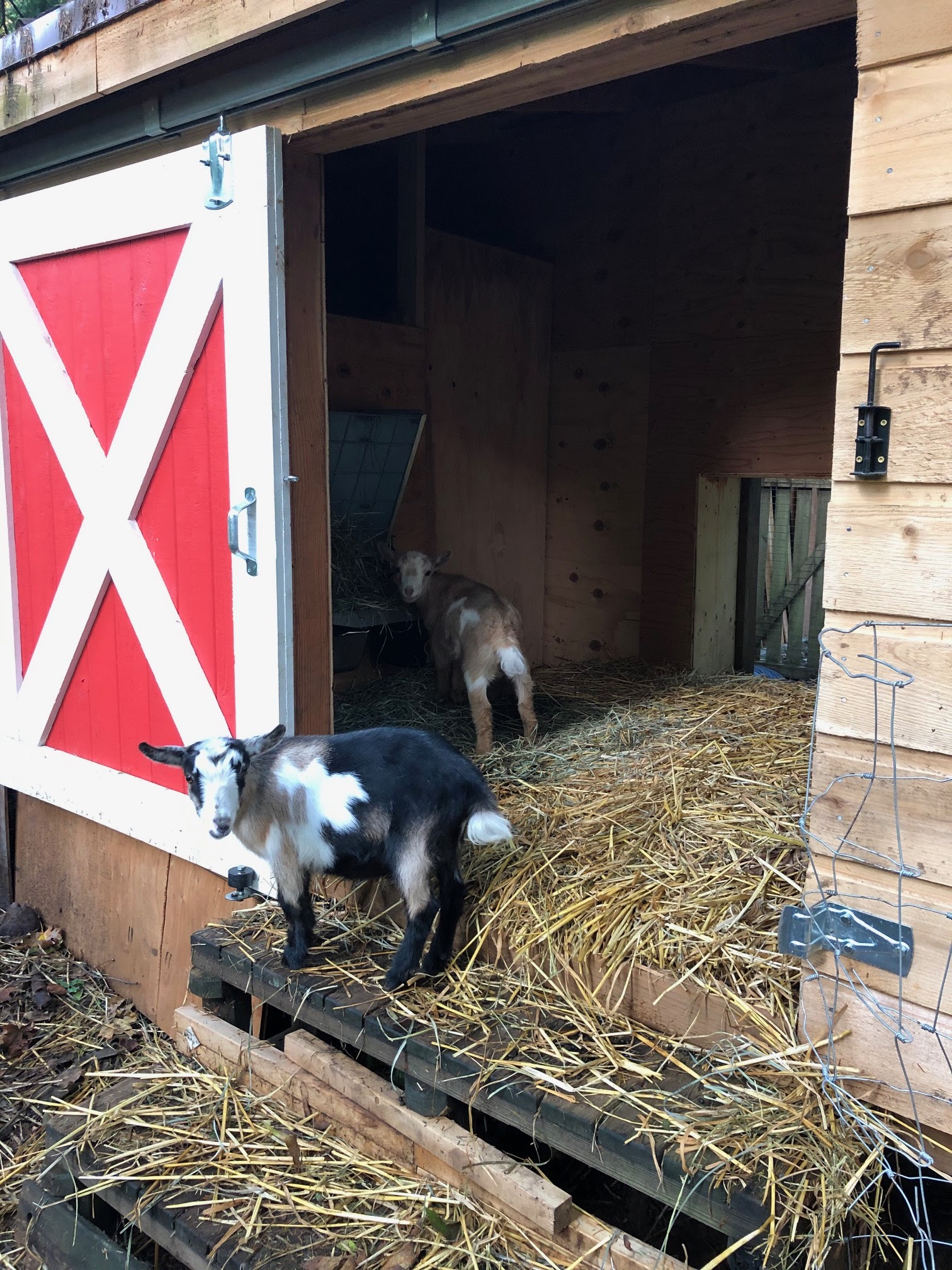
Next, we have flooring. Since we tend to have a lot of flooding in my area, I decided to raise my barn off the ground, making the floors wood. Because of this, I had to add a waterproof stain and some 3/4 inch stall mats I found at the local feed store so that the floor doesn’t rot from all the goat pee, rain and spilled water. Just make sure that if you stain your floor, it’s a couple days before your goats will live there so they don’t breathe in the fumes.
If you have concrete flooring, you can put stall mats over it if you want. It would give the goats a bit better footing and make the barn easier to clean.
If you choose to have a dirt floor (which is by far the easiest way to go) all you have to do is cover it with straw and/or wood shavings, and you don’t even have to do that! (though I would suggest you do)
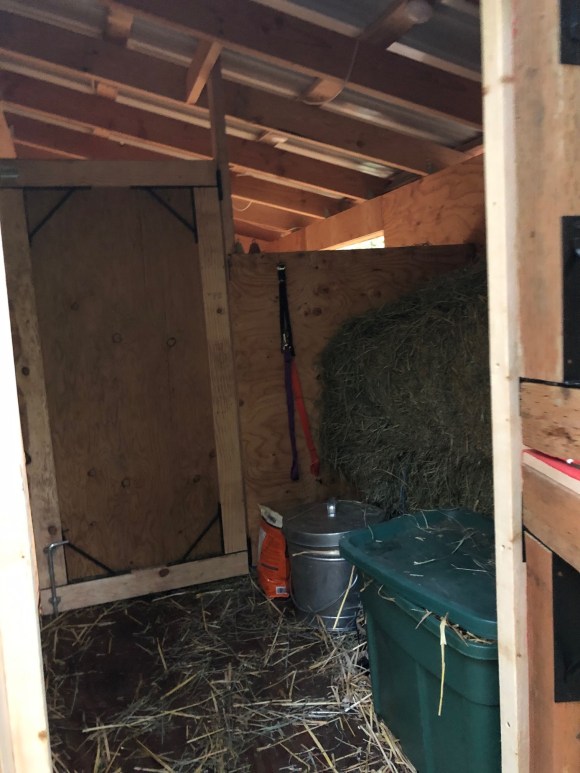
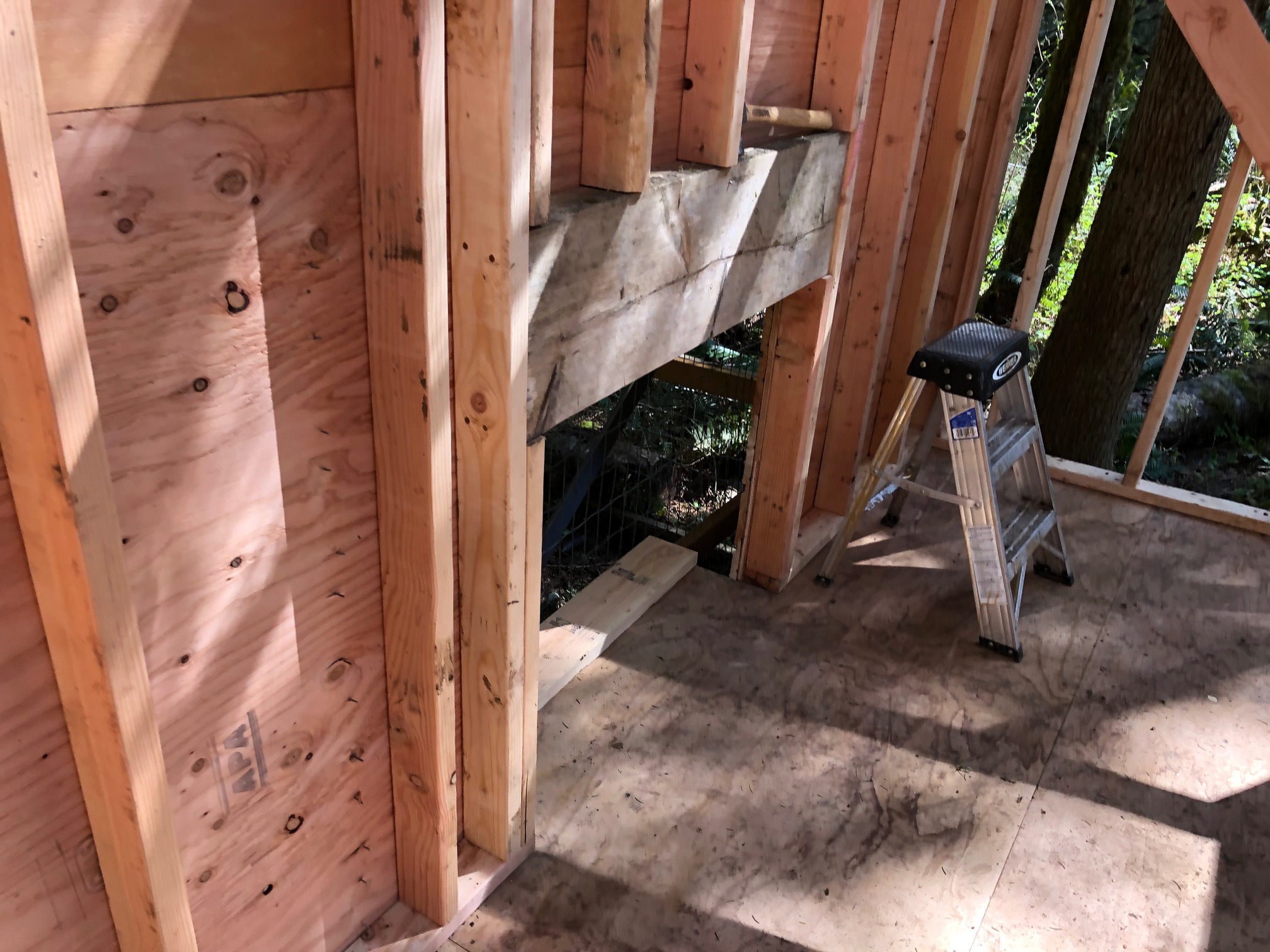
Another thing to consider is hay storage. If you don’t have somewhere to store hay somewhere else, I would suggest adding a hay storage to your barn. Personally, I divide by barn into parts and put a half wall (only four feet tall or more) between my hay storage and goat area. This makes it really easy to just reach over and put hay in the feeder, as well as increasing airflow. Make sure that wherever you store your hay, it isn’t exposed to sunlight or moisture and maybe raise it up a little off the ground (I just put an old pallet underneath).
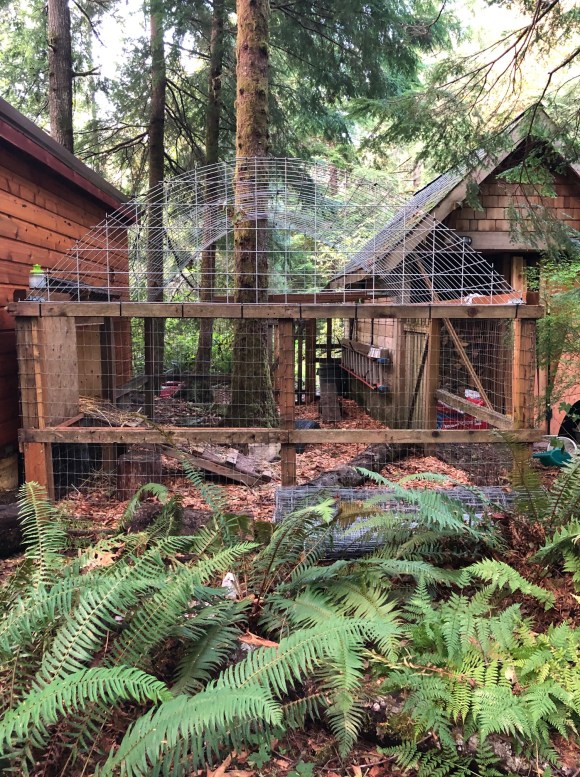
Now this next idea is something that I never read about, but since our goat house was right next to our old dog kennel, we decided to try, and it works great. We added a small area for the goats to go at night (or any time) that was enclosed and completely safe from cougars. We just added a top to our old dog kennel and put a small door between the barn and the kennel. For the top we just took some 4×4 cattle panel and bent it over the top and cut pieces to fit on the sides. We attached the hoop with some brackets that fold over and sandwich the cattle panel in, and just used zip ties for attaching the side panels. The goats can go in the kennel at any time. This is really nice because we like to lock our goats up at night, so they tend to have a few hours between waking up and going to pasture when they can just play in the kennel. You can also lock them up if there’s an animal in the area you’re worried about them getting to your goats. We added a bunch of stumps, tires and rocks for them to play on as well.
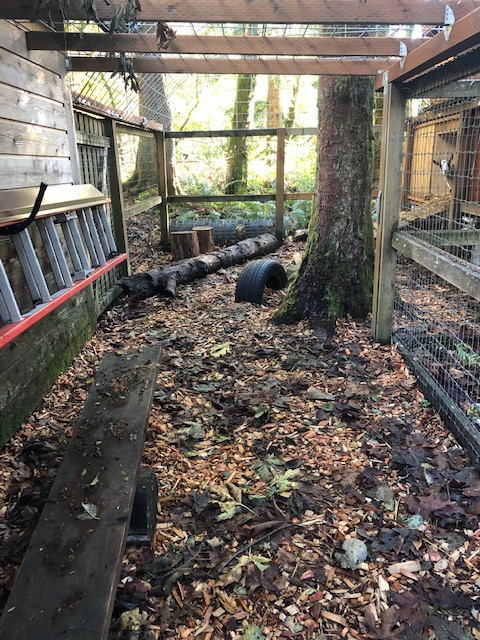
Another thing I’d like to mention is their sleeping area. I would suggest adding some benches or something they can climb and sleep on, as well as go under. It doesn’t have to be fancy, you could just use a pallet with some plywood on top, or look on Pinterest for some other cute ideas. We just did some simple benches with two heights, and the goaties love climbing on them!
Finally, the last step is only for people with milking goats. If you have milking goats, you’re going to need a milking parlor and kidding stalls. In a milking parlor you need to have a milking stand (the size of this depends on the size of your goat) and some shelves for things like grain and milking buckets. You also might want some kidding stalls for mammas to have their kids, as well as to lock up babies as you ween them. If you’re worried about space, you can design some removable doors or doors that can be left wide open the rest of the year, so your stalls don’t take up space. You could also make some removeable stalls with some pallets just screwed onto the floor.
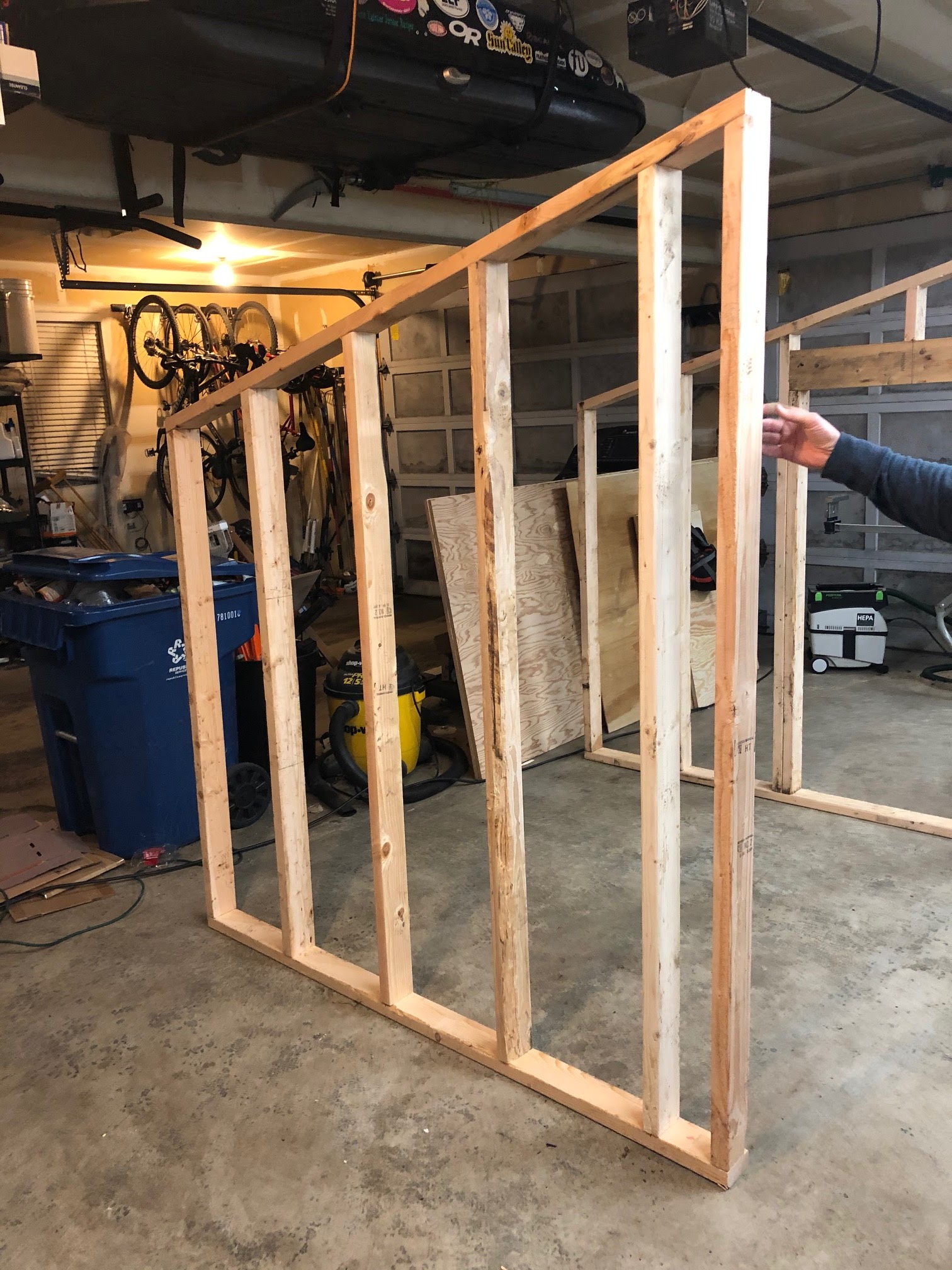
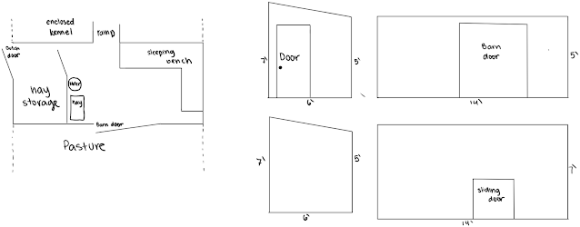
Well, I hope this information helps you design your dream barn! I know it will look great! I believe in you! Below is the design for my barn if you want that for reference.
Other Posts
 Highschool Homesteader
One reply on “Building My Goat Barn”
Very impressive, Clara. Lucky goats.
LikeLike